Wednesday, May 26, 2010

Pulling in to Mos Eisley


I spent my second-to-last weekend in Djerba, an island off the coast of Southern Tunisia.  It was formerly the center of Tunisia's Jewish community for a few hundred years before 1948, but only a remnant today.  An hour or two after arrival, I visited El-Ghriba, the 2000 year old synagogue, which some say was founded before the destruction of the first temple.  While the site was pretty, the constant stream of loud and scantily-dressed tourists from France and Germany took something away from the aura.  What I like about holy places is that feeling of silence.  I love sitting on an old stone floor and just being there.  Sometimes I draw or read the Bible or the Quran, but the solitude is what I love, hearing nothing and feeling the coldness of the stones.  I tried to find a niche at El-Ghriba, but the hustle-and-bustle of tourism and commerce made it impossible.


Look at that metaphor: an olive tree surrounded by guard towers.

So I moved on.


I rented a bicycle in Houmt Souq, where I was staying at a hostel, and I rode down the west coast of the island.  A couple hours later, I arrived in Ajim.  Some of my readership may know it better as that wretched hive of scum and villainy, Mos Eisley.  Many exterior shots of the city were filmed there, including the cantina, the "these aren't the droids you're looking for" questioning, and the escape of the Milennium Falcon from its hanger.


I expected a fair number of tourists, stalls filled with Star Wars knick-knacks, and lots of other stuff, but the area is basically un-touristed.  I was obviously a curiosity there.  In a fitting turn of events, Ajim, like Mos Eisley, serves primarily as a port for those going to and from the mainland and some Libyan merchants. As I wandered the streets, I came upon an old run-down bakery that I immediately recognized as the cantina, where as we all know, Han shot first.  It sits next to a 1970s apartment complex and a few other ruined buildings.

The cantina used to serve berber bread.  Now, it doesn't do that anymore.


The advances of modern construction are really tragic for an art historian. Yes, it's much easier to erect a building with pre-fab materials and steel reenforcement, but that has meant the passing of traditional styles and historical designs.  In Northern Syria, no one is building bee-hive huts anymore when concrete is cheaper.  The only new buildings in Djerba that have domes are McMansions behind tall gates.


Almost all of Djerba's architecture before 1960 could have appeared in a Star Wars scene.  Nearly every building, no matter how domestic or utilitarian was capped with an elegant dome, and you enter through tall arches.


With a sufficient number of schoolchildren laughing at me for wandering around an abandoned bakery, I went North.  A few kilometers north of Ajim on the coast is Ben Kenobi's hut.  Though it's supposed to be on the top of a hill in the desert, it really sits right on the sea.

Sand people travel single file to hide their true numbers.


It was now the equipment shed of a fisherman.  He was out on the water, so I just sat outside the house for an hour or two, soaking in the sun and nerding out because Alec Guiness was there one time.  And Mark Hamill, but that's less exciting.


Ben Kenobi's seaside abode

After a returning back to Houmt Souq with a bruised butt (3rd world bike seats, yowza), I wrote in my journal for a while.  While deep reflection isn't always the best thing for a year spent traveling solo, it gave me some perspective in Djerba.  Here is what I wrote:
"If I could go back in time and tell 12 year-old me that in just ten years, I'd be biking around a small island off the coast of Tunisia, stopping at the Mos Eisley Cantina and asking an old man for directions to "Dar Ben Kenobi," a younger me would be pleased with how awesome I turned out."
Chasing childhood dreams may not be a sane way to live one's life, but stumbling upon them a few years on is imminently satisfying.
The world economy has hit everyone. The Jawas had to sell the sandcrawler and now they ride the bus like everyone else.  (Actually, these cloaks are traditional male garb in the south.  Pretty cool though.)

Tuesday, May 25, 2010

Djerban and Tunisian cuisine

Not to get all bigoted about this, but Jewish brik is way crispier [i.e. better] than its Muslim counterpart.  
I didn't even remember to take a picture until it was half-consumed.

After a long day of visiting Jewish sites, I followed my heart to a seafood restaurant and ate a mountain of clams.  My stomach pays no attention to the Book of Leviticus.  Well, most of me ignores that book.


The Best Way to Get Called Fat
[Spoken in a thick Belgian French accent]


"Edward, it is okay you carry a few extra kilos. You love wine.  You love food.  You love life."

Tuesday, May 18, 2010

Kittinvasion

Kittens moved onto my front porch.  Adorable ensued.


Saturday, May 15, 2010

Quick! Someone call the girl police, and file a report.

Shisha and Feminitity


As I puffed away on my arghileh in a cafe in Sidi Bou Said, a friend leaned over to me.  "A woman," he began and I had no idea what was coming.  "A woman who smokes shisha...she is not a real woman.  She is like a man."  I have no idea what that means.


Prude and Slut


Undoubtedly, going to an insular liberal arts school tilts one's view of reality.  For example, until I graduated, I thought Arcade Fire and the New Pornographers were the biggest bands in America.  Well, I suppose they're Canadian, but that's besides the point.  Leaving a liberal feminist bastion like college and arriving in the Middle East and North Africa was a rude awakening that involved concealing beliefs, accepting prejudices, and rolling my eyes a lot.  Unexectedly, this was the case with Westerners in addition to Arabs.  Over lunch with some European classmates, the conversation drifted to the latest expatriate gossip - who slept with whom, etc.


One woman said, "I would much rather be known as a prude than a slut."


"Oh, me too," another confirmed.


A few more affirmations were uttered until, as is often the case, I couldn't keep my damn mouth shut.  "Wait, are we really having this conversation?  Why are you choosing these labels and asking for judgment?"  I got a hearty sneer, and one replied, "I'm a feminist."  Which almost makes it more frustrating.


A Talented Male Poet named Ani


On a road trip, I combined my interests in subversion, hogging the iPod, and Ani DiFranco. Hilarity ensued.  After playing "Self Evident," a rather intense Ani tune (oh wait, they're all intense), another passenger heard the line "3000 poems disguised as people."

"That is very beautiful."  He translated it into Arabic for another person in the car.  "The man who wrote it is very talented."  I had to break it to him that Ani DiFranco is a woman, and she wrote it.  


If only someone were studying Arab women poets.


The Burqa and the Bikini


This short play by Sabrina England, the self-described deaf muslim punk playright, should be read in its entirety.  I came across it last fall.  It's a pithy, funny dialogue between a burqa and a bikini that forces well-meaning liberal readers to reexamine what their well-meaning paternalism really means (cough, France, Quebec, and Belgium, cough).  My own belief is that a piece of fabric can't oppress anything.  People do all the oppressing.


BURQA
You call this oppression, I call this my liberation.
That's all for now.
A muhajaba (a hijabed woman) teen paddles out on a surfboard in Sinai, Egypt.
Enjoy some Ani.


[In class this past week, we read an article by Tahar Haddad, a 20th century Tunisian feminist, on polygamy and its place or lack thereof, in Islam.  Polygamy is banned in Tunisia, but coincidentally, one of my fellow students has three wives.  Two stay home while the third comes to Tunis, then they rotate.]

Wednesday, May 12, 2010

Blood Honey

In class today, our teacher was attempting to teach us the word for "inject."  People didn't understand, so she took it back a step to "sting."  "What animal makes honey?" she asked.  I don't know the word for bee, so I used my expert skills at paraphrasing to come up with "large mosquito."  I answered.  A terrified look appeared on her face.

---

I put four new covers up at drop.io/tedssongs including a honky-tonk Oasis cover, me pretending to be Bob Dylan (hey, he used to be Jewish), some Kris Kristofferson, and a mashup I made of Arlo Guthrie, Kenny Rogers, Lady Gaga, and Beirut.  I chickened out on my Joanna Newsom song.

Saturday, May 8, 2010

The Story is in the Soil, Keep Your Ear to the Ground


By an odd chain of events, I'm realizing my childhood dream of becoming Indiana Jones.  No motorcycles or gunfights with Germans yet (I'm watching you Julian.  No sudden movements.), but this past week I joined in a French-led archaeological expedition at the Jewish cemetery in Tunis.  At the synagogue last Saturday, some French-Tunisian and French-French Jews were visiting.  Chatting over stiff drinks in a religious space, an activity that is rapidly becoming far too common for me, they asked what I study and why I'm in Tunis.  After telling them my interests and what I'm doing here, one told me that he is a historian of Tunisian Judaism.  In fact, he literally wrote the book on Tunisian Judaism and its identity crisis during the last century, stuck between assimilation and Zionism.


Their visit to Tunis wasn't just for fun; they were leading a team of historians, art historians, archaeologists, and architects in recording and restoring the Jewish cemetery on Rue du Kheireddin Pasha outside Tunis's center.  They invited me to join their team.  I was a little bit speechless.  Imagine playing some sport on a playground and some professional athlete of that sport invited you to play with him and his professional athlete friends.  Well, this is the nerd equivalent of that.
An overgrown path in the cemetery


---


Day 1: I'm pretty sure that's just Jesus


On the first day of restoring/recording the cemetery, a group of Tunisian Jews came to visit the tomb of a famous rabbi (from the 1700s, I believe).  His grave had been relocated from the old Jewish cemetery, which was urban renewal'd into a park near La Passage and Place Republique, to the "new" one  from the 1800s, which we are now excavating.  According to the legend, the rabbi performed miracles, cured diseases, and received visits from people across the country who wanted to pray with him. He said he could not die, so when he, y'now, died, on his tomb his followers wrote "lo met", which my rudimentary Hebrew (really just Arabic with an accent) tells me means "did not die."


I didn't have the heart to tell them that there's a whole religion based around a rabbi who performed miracles in the Middle East and didn't, but quite possibly did, die, and may or may not have remained dead.


Pilgrims at the Rabbi's grave lighting candles, eating trail mix, and drinking aquavit


Day 2: When the moon hits your eye like a big pizza pie, that's a mitzvah


As I wheeled a wheelbarrow (in Arabic, barriweel) filled with brooms, trowels, toothbrushes, and acid towards the section of the cemetery on which we were beginning on Monday, one of the leaders of the project, whose grandparents emigrated from Tunisia to France, lamented the state of the area.  "It is a great tragedy that the community left here hasn't taken better care of it.  It will make it easy for the government to annex the land when they want it.  It is a great mitzvah what we are doing."


The second day followed the first, with digging, scrubbing, and brushing a century of dirt and refuse off of the stones.  It is a great lesson in humility to clean a grave with a toothbrush.  It's humiliating in the positive sense of the word.  One might ponder the questions of life, the universe, and everything.  However, in my case, it made me realize that in my rush out the door at the crack of dawn, I had forgotten to brush my teeth.  Brushing old stones with a toothbrush for a few hours perhaps was Jewish-karma getting me back.


Just before I left to go study Arabic in the afternoon, we found a very damaged, but quite interesting grave.  It was one of the few we've seen in Italian (most are in Judeo-Arabic, Hebrew, or French).  The man's name was Aron Bdusa, and he died in the late 1800s.  Working in the graveyard has brought to light so much about Tunisia's diverse and polyglot Jewish community.  In addition to Berber and Arab converts to Judaism who had lived in Tunisia for centuries, Tunisia received refugees from the Reconquista in 1492 (with names like Perez and Castro), expulsions from Italy and France, and even secondary immigration from the Ottoman Empire (including one family named Constantini, not a common Jewish surname. and Stambouli, which is a bit more common).


Day 3: Live Long and Cohen


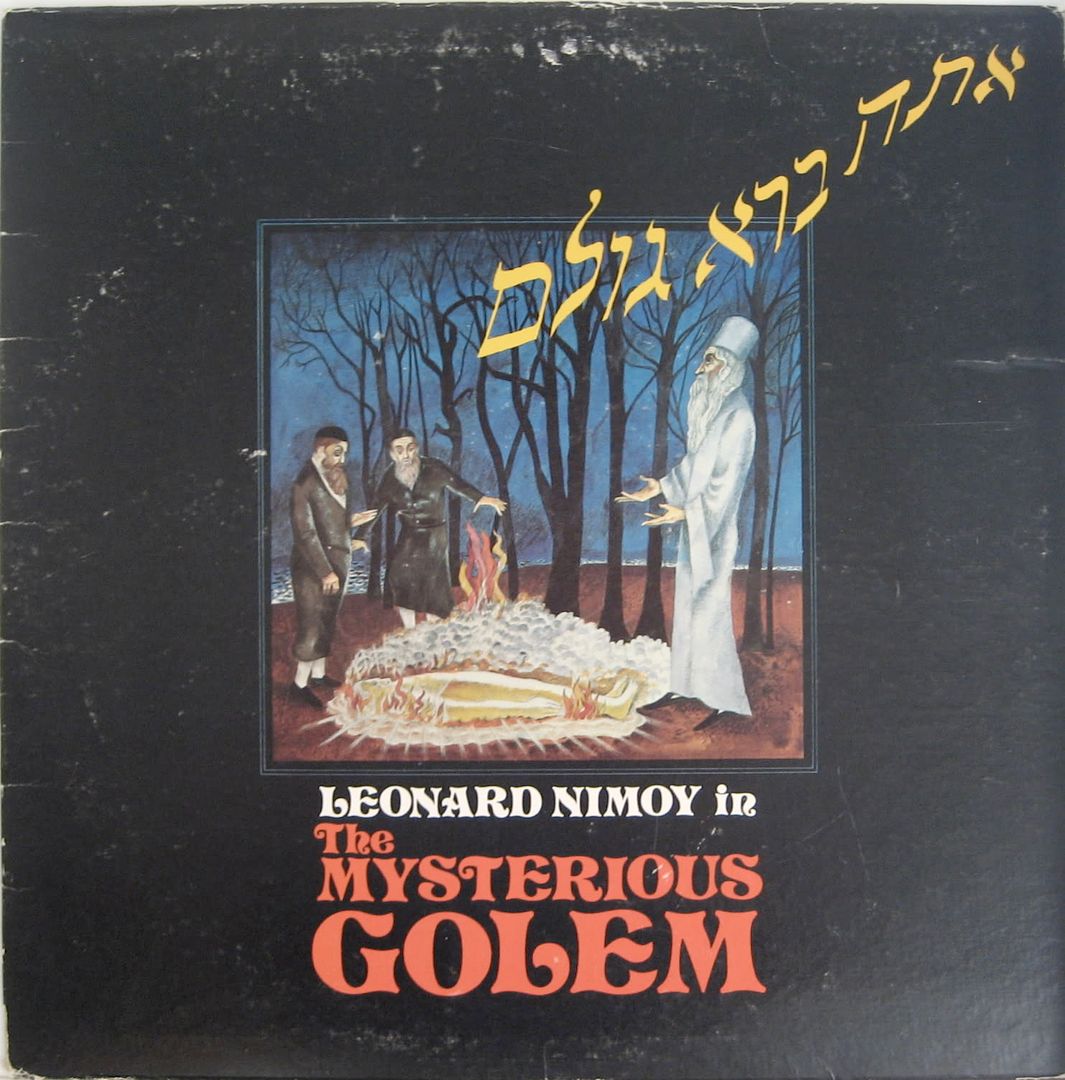
Over the course of the project, I learned a few things about Tunisian Jewish funerary decoration.  Along with  classical frames, Ottoman decorative styles, and symbolic decorations like broken columns and fallen trees for those who suffered violent deaths, on the graves of all Kohanim (which interestingly, is related to the Arabic word for priest, kahin), are a pair of hands in benediction position.  I watched a great deal of Star Trek as a kid, so I knew this better as the Vulcan greeting.  A little bit of homework revealed that Leonard Nimoy was raised in Orthodox Judaism, and thus, my world was rocked.  [Shatner is Jewish too, but we all know that he was far inferior to Patrick Stewart in his command of the Enterprise.]


May the Lord bless you and guard you
May the Lord make his face shine upon you and be gracious unto you
May the Lord lift up his face onto you and give you peace
- The Priestly Blessing

Live long and prosper.
-The Vulcan Benediction


Day 4: I want to ride my bi-cy-cle

While wandering the cemetery to catch my breath, I found a broken tablet with a curious carving.  The man who lay beneath died young, only 22 at his death in 1907.  Across the top of his tombstone was a turn-of-the-century bicycle.  Marc speculated it was possibly the instrument of his death, as we had previously seen guns and knives on the graves of murder victims.  Is it a fixie?


Day 5: Why did Constantinople get the works? 


We found many signs of Tunisia's place in the Ottoman Empire and the intra-Mediterranean contact of the Jewish community.  In addition to names like Constantini and Stambouli, decorations included Ottoman-style rose engravings, mosque motifs, and even a star and crescent.


Ottoman Rose and Dove bearing a leaf that reads "Mordechai"
Star and Crescent


Day 6: Allah the ladies in the house say yeah.


Our final day was a bit easier than the rest of the week.  We had finished the oldest section of the cemetery, which featured long poetic inscriptions and more intricate designs, and we had begun work on the less-decorated women's tombs.  


It struck me that no matter how big the Jewish community once was, and some estimates put its pre-war zenith at 80,000, I kept seeing the same dozen names like Bismuth, Perez, Maarek, and Lumbroso.  In the women's division, we found graves that connected those families.  In a hundred years, a vibrant community had become just a bunch of tomb stones.  A ghost.


---


On the 7th day, I rested.


What I heard time and time again from all involved was not that this was some sort of sectarian project, but rather that it was Tunisian history and deserved preservation.  In addition to the French and Tunisian-French Jewish academics on the team were several Muslim Tunisian professors and students of history, preservation, and Hebrew.  The guardians of both the Jewish and Christian cemeteries of Tunis are a Muslim family who have taken care of them for a few hundred years.  


I don't think Tunisia's Jewish community or the other Jewish communities of the Middle East and North Africa were ever the happy-fun-diverstravaganzas that some might claim, but the fact remains that Arab Muslims and Jews lived side-by-side in close communities for hundreds, and sometimes more than a thousand years (with institutional biases like jizya and dhimmi, but not the communal enmity and pogroms that were so prevalent in Europe).  Only the last century of British and French meddling in these regions has really changed that. I have a political agenda as much as anyone else, but it's really heartbreaking to histories and memories erased in favor of a more combative narrative that makes conflict seem inevitable.  When the question of Israel/Palestine is brought up, people both in the West and here fall back to old platitudes about age-old enmities.  "They've been killing each other for thousands of years" and so forth.  When Likud and Hamas agree on something, maybe that should be a red flag that they're just trying to rile people up to hatred.


I think what excited me so much about this project and the people with whom I worked was their pluralism, diversity, and openness.  I didn't have to feign religiousity in order to take part; I could just be myself and believe what I believe.  Reading old things remains an exciting experience for me, which is a good thing with six or more years of grad school upcoming.  While my reading material usually comes in printed form, having to dig it up was incredibly thrilling.  I love history because I love stories, and trying to piece together a person's life from their grave stone was a challenge and a joy.  And it forced me to buckle down and learn a bit of Hebrew finally.


[A few notes: I didn't even think about the zombie implications over digging up a cemetery until the 4th day on the project, but while I'm on the topic, "zombie outbreak on an archaeological dig" is an excellent film premise.  There are so many incredible things I learned this week that didn't make it into this post like about this guy and the Jews who fled to Malta and became British soldiers.  Finally, for my own thoughts on the matter, I uploaded my cover of John Prine's "Please Don't Bury Me" at drop.io/tedssongs.]


Thursday, April 29, 2010

Sometimes, Tunis tastes like a pickled lemon


A few rambles and a lament about Tunisia:

The Royal We
Tunisian Arabic is a strange beast.  It is almost totally different from Syrio-Jordanian Arabic and features almost an entire grammar's worth of words from French (principally), Italian, Sicilian, Spanish, and Berber.  Woman is not mar'a as in Arabic but mujer (with the pronounced j) from Spanish.  If you want tea, you don't say shai, it's only thé vert in these parts.  Both simple concepts like number (numero, not raqam) and complex ideas (ideologia, not 3aqeeda) are borrowed from European languages.  Unlike places like Lebanon and France, this linguistic mixing isn't frowned upon in Tunis; some are even proud of this aspect of Tunisian life.  Whatever the truth of the matter is (and I've gotten more jaded about Tunisia as I've gained a wider experience of life here), Tunisia likes to imagine it is an island in the Mediterranean, taking the latest styles from Paris and Milan and looking with a mixture of disdain and pity on the Arab east.

And so nearly everyone from the waiter and taxi-driver to the president is bi- or tri-lingual.  Myself, I am illiterate in several languages.  Eating lunch with a few Europeans and Tunisian, an intoxicated Tunisian who was attempting to impress an Italian woman, began questioning me about my language abilities.
"Do you know Greek?" "No." "Really, I speak fluent Greek."
"Do you know Italian?" "I can't speak it anymore." "Oh that's too bad.  I speak fluent Italian."
"Do you know Spanish?" "I can understand it." "Good. I speak fluent Spanish."
[there were several more rounds of this game]

I wondered whether he was the first one to be so important that he had to use the first person plural prefix (n-) on the first person singular (which is normal in Tunis).  The Royal He.  Then I made fun of him in pig latin to the other North Americans who ARE fluent in that wonderful language.

---

Vegetable Curries Need Not Apply

One vast improvement on my travels in Egypt and Ethiopia is that I have a small, dungeon-ish kitchen here in Tunis and I can cook (if not bake).  I found a nice Sunday vegetable market a kilometer or two away and I've been going there to stock up for the week on amazing produce.  This naturally elicits lectures from my four roommates who think a young man should be eating large hunks of red meat, eggs, and tuna, often all together.  I offered one roommate a bowl of vegetable curry and he literally spit it out.  And I'll remind my readers that I once won a cooking competition.

Other enjoyable foods that get mocked in my home include iced coffee, grilled cheese, and balsamic vineagar.

---

Drinking with Religious Minorities

Last Saturday, after Shabbat services, I went to the home of a Tunisian Jew for lunch and whiskey.  It was uncomfortable.  I love politics, but you can never make anyone happy when you talk about Israel/Palestine.  I care about the Palestinian homeland, but I also think that the anti-Semitism in the Middle East is pretty frightening.  I like the idea of a Jewish state, but I also think it should be a just and peaceful place for all of its inhabitants.  What I'm trying to say is that I frequently have trouble keeping my damn mouth shut, and this often gets me labelled a Zionist or an anti-Semite, which I've found are thrown around when you don't like what the other person is saying or what he or she looks like.  On Saturday, as one man bragged about how his son lives in a settlement in the West Bank, another made a comment that essentially translates to, "I wish we could just get rid of the Palestinians already."  I felt sick inside.  I obviously hadn't had enough whiskey.

When I was planning my research this year, I thought Tunisian Jews would be a really interesting case study on the Arab-Israeli conflict, as they are both Arab (by many definitions) and Jewish.  Maybe they're the voice that isn't being heard about Arabs and Jews holding hands, living side-by-side, and working together as Benjamin Disraeli envisioned?  Jews lived in majority-Arab countries for nearly a thousand years.  Why did Jewish lives in Morocco, Tunisia, Egypt, Syria, Lebanon, and Iraq change so radically just because a completely separate group of their co-religionists founded a country and fought a few wars?  What I've found isn't encouraging in my hopes of Semitic brotherhood (remember, Arabs are Semites too).  As the Jews here in Tunis have faced increased persecution both from the government and their surrounding communities, most left for France and Israel, and the people that remain have grown bitter towards the country and people that no longer welcomes them. 

Tunisia has a wonderful facade of freedom, human rights, and religious and cultural diversity.  I can leave it to the screams from the basement of a certain building on a certain street to comment on the former issues.  As to the latter, they're a relic, show-and-tell for the rest of the world.  "There's no anti-Semitism here.  Look, there are some Jews!"  Shops in the souq sell key-chains with Hebrew letters, but the people that can read them are foreigners.

I've tried to make sense of what I've seen and heard about Jews and Palestinians here and in my travels around the Middle East.  Usually, what I'm thinking starts with "I wish..." because the present is just so profoundly unsatisfying and often repulsive.  I could write a hundred things I wish about diversity and understanding in the Middle East, but I think it could be essentialized as "I wish people would recognize their shared humanity."  I believe a more cynical version was uttered by my Uncle Sheldon at one point: "religious people ruin everything."

That's all for now.  Below is a picture of the Great Mosque at Kairouan on a stormy day.